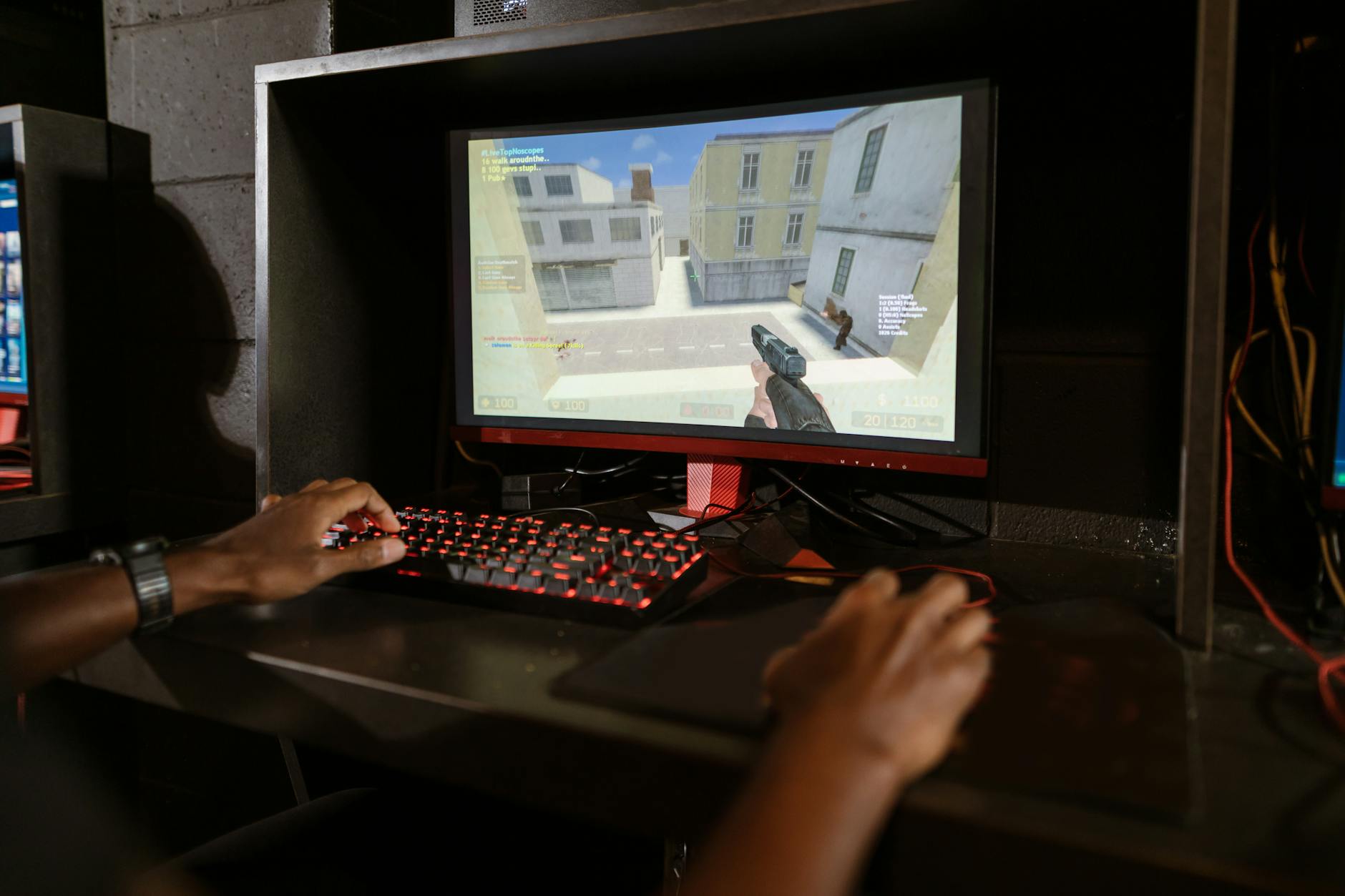
The Fascinating Journey of Online Games Through the Decades

The landscape of online games has undergone a remarkable transformation since its inception. What began as simple text-based adventures has evolved into a vast universe of interactive and immersive experiences. This evolution reflects not only technological advancements but also changes in user behavior and gaming culture. Understanding this journey is essential for anyone interested in the future of digital entertainment.
From the early days of MUDs and text-based multiplayer games to the present-day graphically rich virtual environments, online gaming has continuously adapted to meet the expectations of its audience. The development of the internet in the 1990s paved the way for the first mass multiplayer online games, allowing players to connect globally in shared environments.
The Birth of Online Gaming
The roots of online gaming can be traced back to the late 1970s and early 1980s, with innovations like the game “Maze War” and the first text-based MUD, which emerged around 1978. These pioneering games utilized early network technology, enabling players to interact in simple online worlds. However, it was the introduction of the World Wide Web in the 1990s that truly catalyzed the growth of online gaming.
The Rise of Massively Multiplayer Online Games
The late 1990s saw the emergence of games like “EverQuest” and “Ultima Online,” which offered expansive worlds for thousands of players to explore simultaneously. These games incorporated subscription models, creating a sustainable revenue stream and setting a precedent for future projects. The popularity of MMOs reached new heights with the release of “World of Warcraft” in 2004, which became a cultural phenomenon, amassing over 12 million subscribers at its peak.
Technological Innovations and Their Impact
The evolution of hardware played a pivotal role in advancing online gaming. The increase in broadband internet penetration enabled faster and more stable connections, allowing for seamless multiplayer experiences. Furthermore, the development of mobile technology has revolutionized how games are accessed, with smartphones and tablets bringing gaming to a wider audience. According to Statista, in 2022, mobile gaming accounted for over 50 percent of the global gaming market revenue, demonstrating a significant shift in player demographics.
The Social Dimension of Online Gaming
As gaming evolved, so too did its social aspect. Online games now serve as platforms for social interaction, with features such as voice chat, guilds, and player-generated content enhancing community engagement. Games like “Fortnite” and “Among Us” have capitalized on this trend, blending social dynamics with gameplay to create shared experiences that transcend traditional gaming boundaries.
The Future of Online Gaming
Looking ahead, the future of online games seems poised for further innovation. Virtual reality (VR) and augmented reality (AR) are beginning to create new dimensions of interactivity, providing immersive experiences that were once the realm of science fiction. As technology continues to advance, the potential for online games to integrate into various aspects of daily life grows, suggesting a future where gaming is not just entertainment but a fundamental part of social interaction and even work.
About Me

Chesung Subba
Author/Writer
Hello, I'm Chesung Subba, a passionate writer who loves sharing ideas, stories, and experiences to inspire, inform, and connect with readers through meaningful content.
Follow Me
Connect with me and be part of my social media community.
Leave a Reply